
I found a small campus choir, maybe 30 strong, who were practicing a cappella pieces of Poulenc and Boris Vian jazz pieces. I found an advertisement for the choir the same day as rehearsal, emailed the director, and just showed up. Everyone was friendly and welcoming. The warm ups were more nuanced than I was used to, but produced a very full bodied sound for the ensemble (lots of use of Hums, buzzes, and breath longevity exercises).
During the Rehearsal it was beautiful to share the experience of creating music together, despite my language difficulties. I may did not understand everything the director said, however I felt so deeply apart of the ensemble; a sense of belonging and another place were “home” is created. This reminds me of my community college choir professor’s philosophy that choir has the capacity to create beautiful community because it transcends race, politics, sex, and religion, or, in my case-language.
After the rehearsal there was a Birthday Party at one of the bass’ house.
The table was full Alsacien cheeses and wines, and some German beer. A specialty aperò was a fig on bread with a strong blue cheese (Roquefort) and a drink of a strong red wine with it—very delicious.
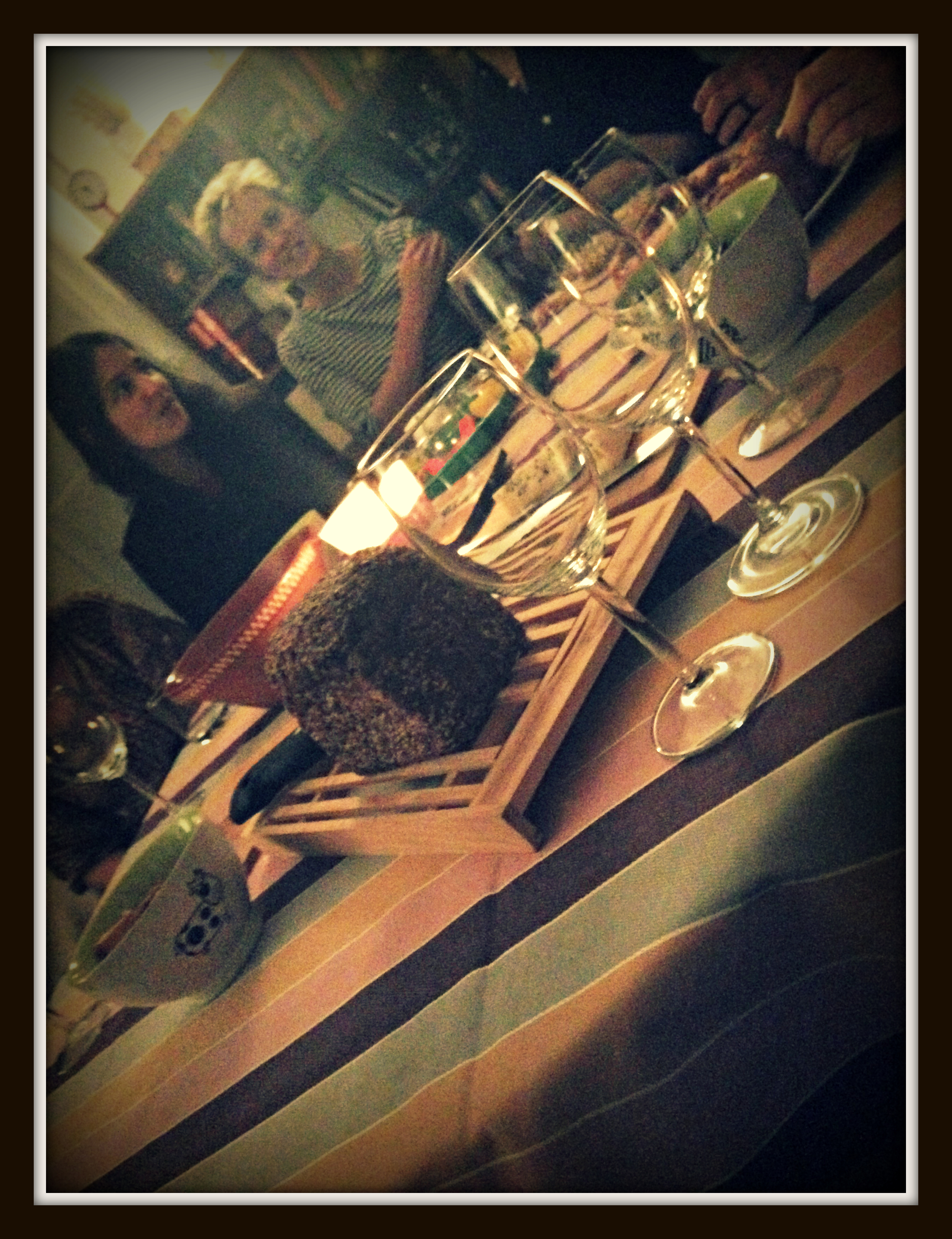
People were very fascinated with the American culture and curious what Americans thought of the French. They asked me to sing so I sang a Massenet French art song.
The rest of the night was spent exploring and honoring the diversities of languages and culture.
With analysis of the different pronunciations of “r” in dutch, Russian, French, and American
The different embouchure for vowel placements
With learning short phrases in Japanese and Creole (dialect of french)
The host used his house as a hostel and invited people from all over Europe to stay, he must have spoken at least 6 different language, other people in the choir spoke 3-4 languages. At midnight we sang happy birthday in Dutch, Spanish, French, and Russian; most of us were mumbling the lyrics that we were just taught.
Another language experience was with a Columbian couple, Pedro and Carolina. Pedro spoke a good amount of English, fluent Spanish, and very little French. Carolina spoke fluent Spanish, more French, and comprehended English (but did not speak it). Pedro would practice his English with me and when he did not know how to say something he would talk in Spanish to Carolina, then she would translate into French and I would continue speaking in English to Pedro, or French with Carolina. This interaction was exciting. Pedro, also an artist, has offered an art commission in échange for English practice.
Today’s idiom, “Je connais la musique,” literally means “I know music,” in other word “tell me something I don’t know.” For me, this week has been a lot of learning things I don’t know, one of them being Contemporary Opera. The next two weeks, 09/21-10/8, is the Music Festival in Strasbourg, which celebrates and explores contemporary classical music: opera, symphony, choirs, chamber recital, and music concrete. The opening night was an opera film, Giordano Bruno, by Francesco Filidie. The opera is based off of the story of a Dominican Friar tried with heresy during the Grand inquisition. The opera was set into 12 tableaux which symbolized the 12-tones in a scale, starting with F# and eventually returning to the same musical and dramatic theme at the final scene. The main theme was being wrongly accused and the injustice that followed (for Girodano being burned at the stake) and more over that history repeats this injustice. This repetition is illustrated dramatically by the chorus cleaning up the coals and ashes at the beginning and Giordano being stripped and covered in tare and coals at the end. And this theme aurally realized by the literally use of repetition and returning the thematic material in the final scene. This visceral opera explored orchestral tones I have never heard before and went beyond my understandings of theory. The way that he created moods without aurally understood ideas of tonality was fascinating. He also used complex forms of rythme and repetition. My favorite scene was his defense at his trail with the Grand Inquisitor (Scene: Condamnation [rè]). Where Giordano’s defense is repeated with intensity that drives him into the following scene of mental insanity, this use of montra phrases brought me more into the mental world of the character, which I loved.
If you are interested here is a link: Giordano Bruno Opera
Gumby Goes to Germany:
Another adventure included going to Offenburg Germany, because groceries are cheaper (almost 2-3 times cheaper). I would start every cashier interaction with: Bitte, mein deutsche ist nicht so gut. Everyone was gracious enough with me.
Some more pictures:
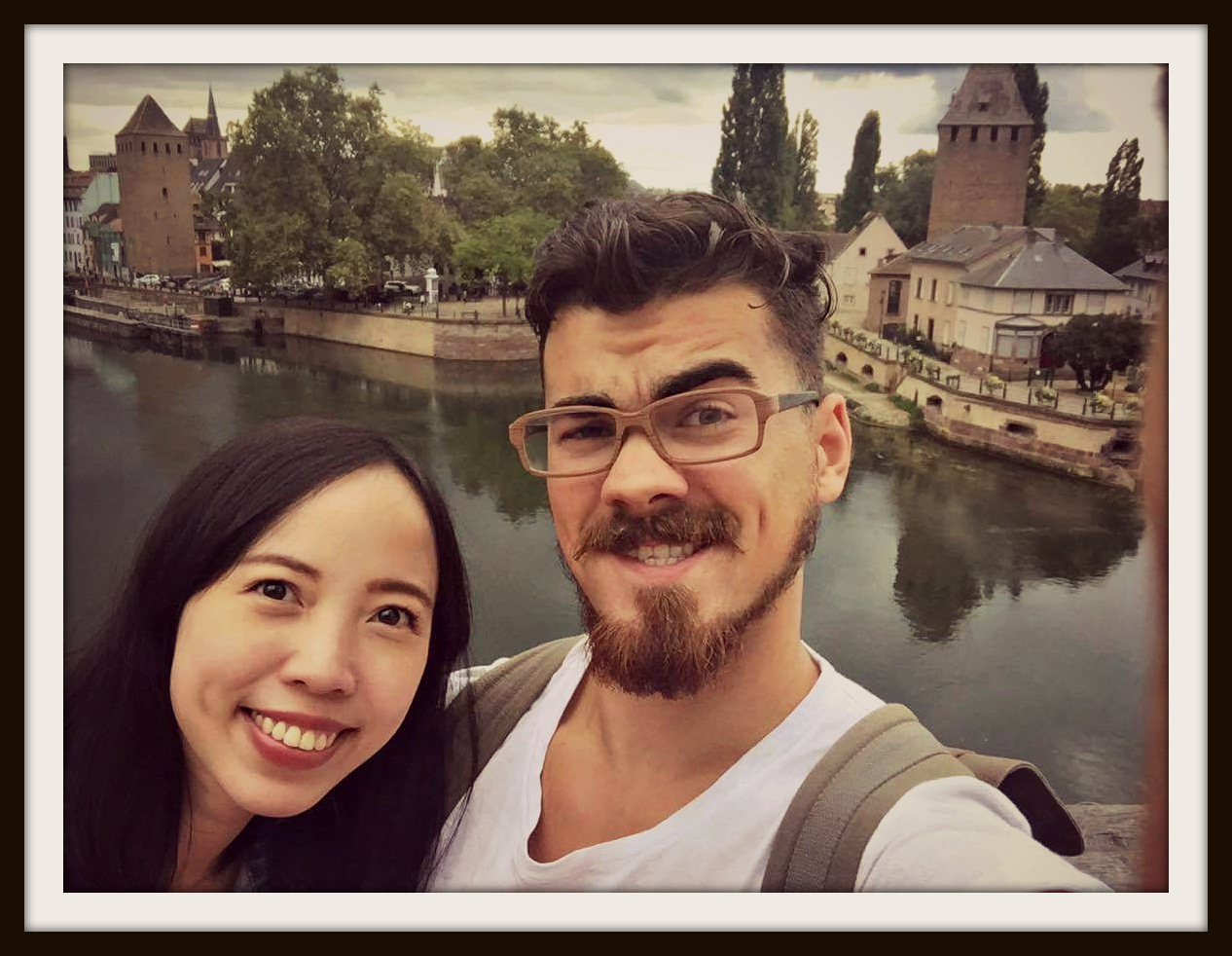
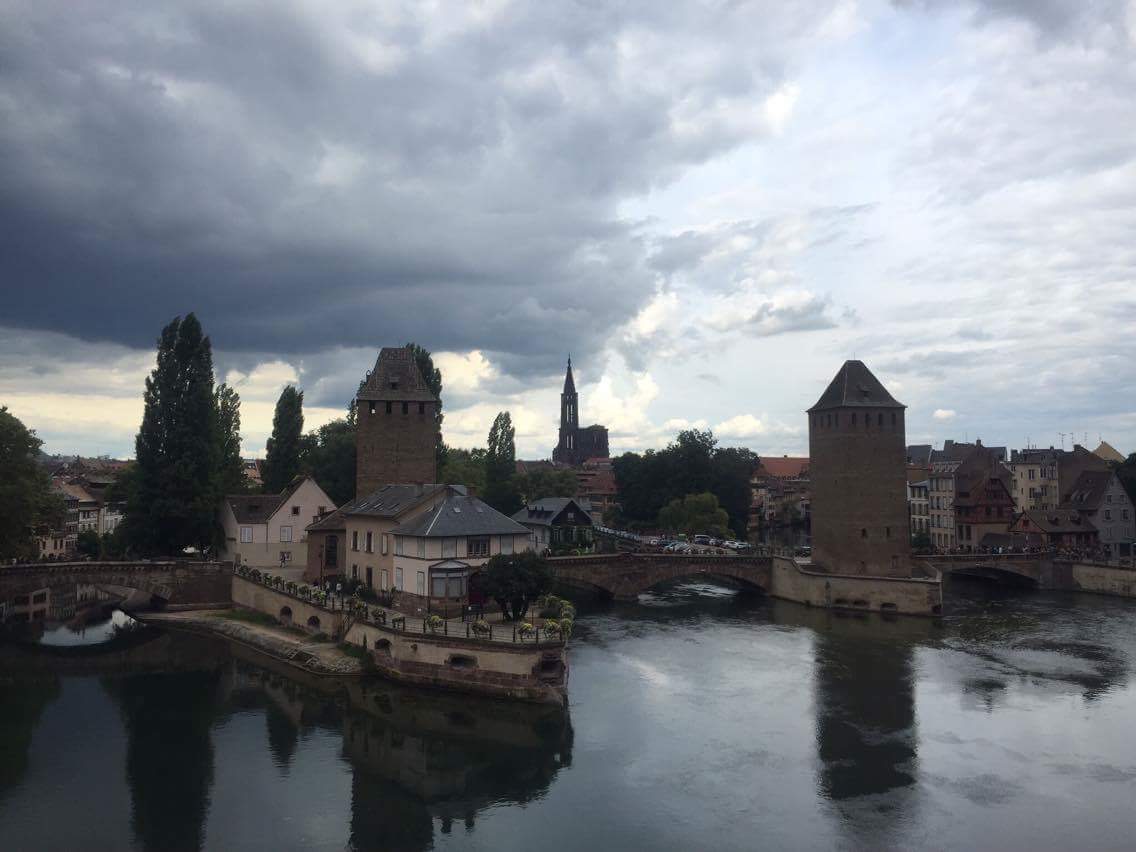
À la Prochain,
DCM
 Duncan Clark Menzies
Leave a comment