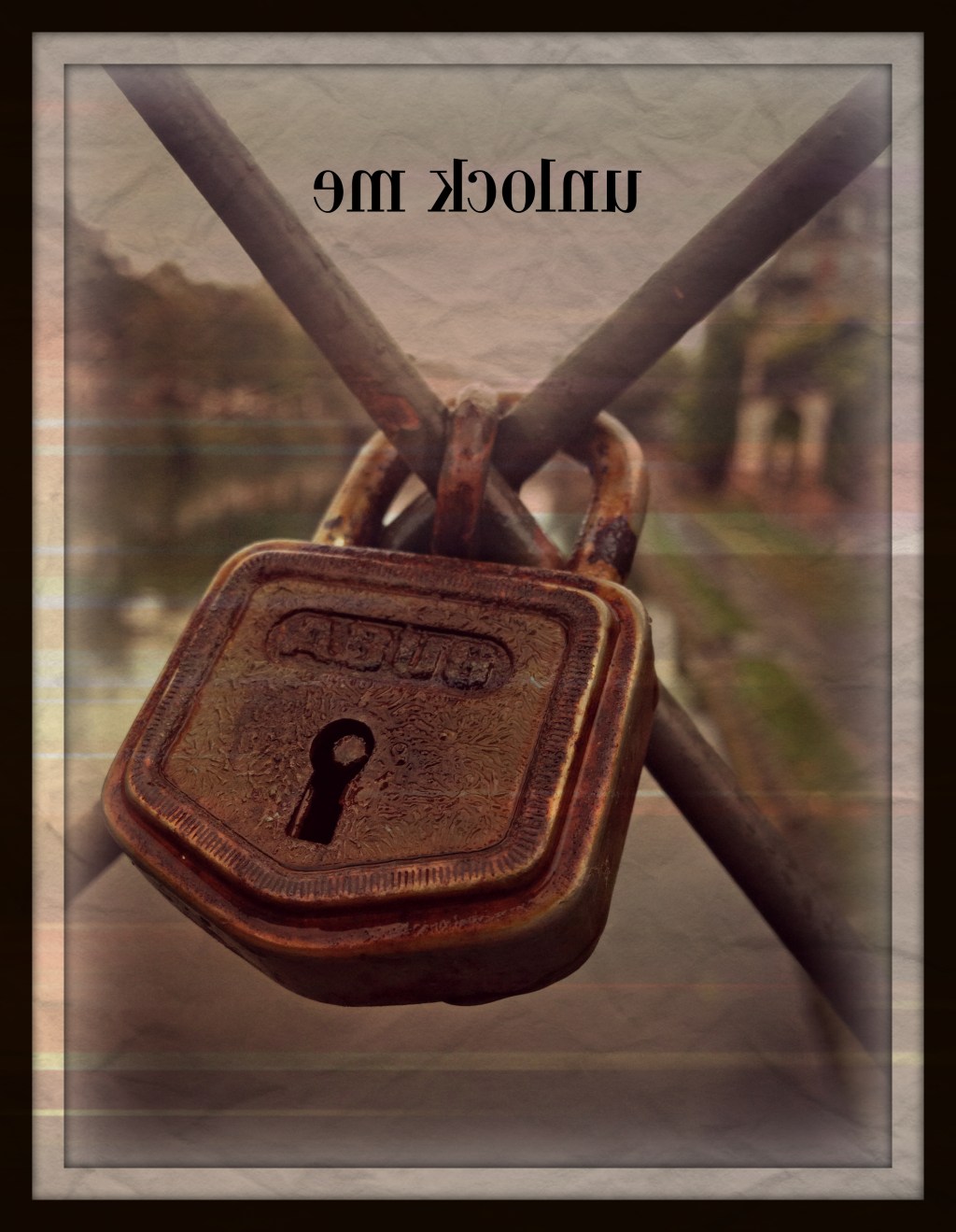
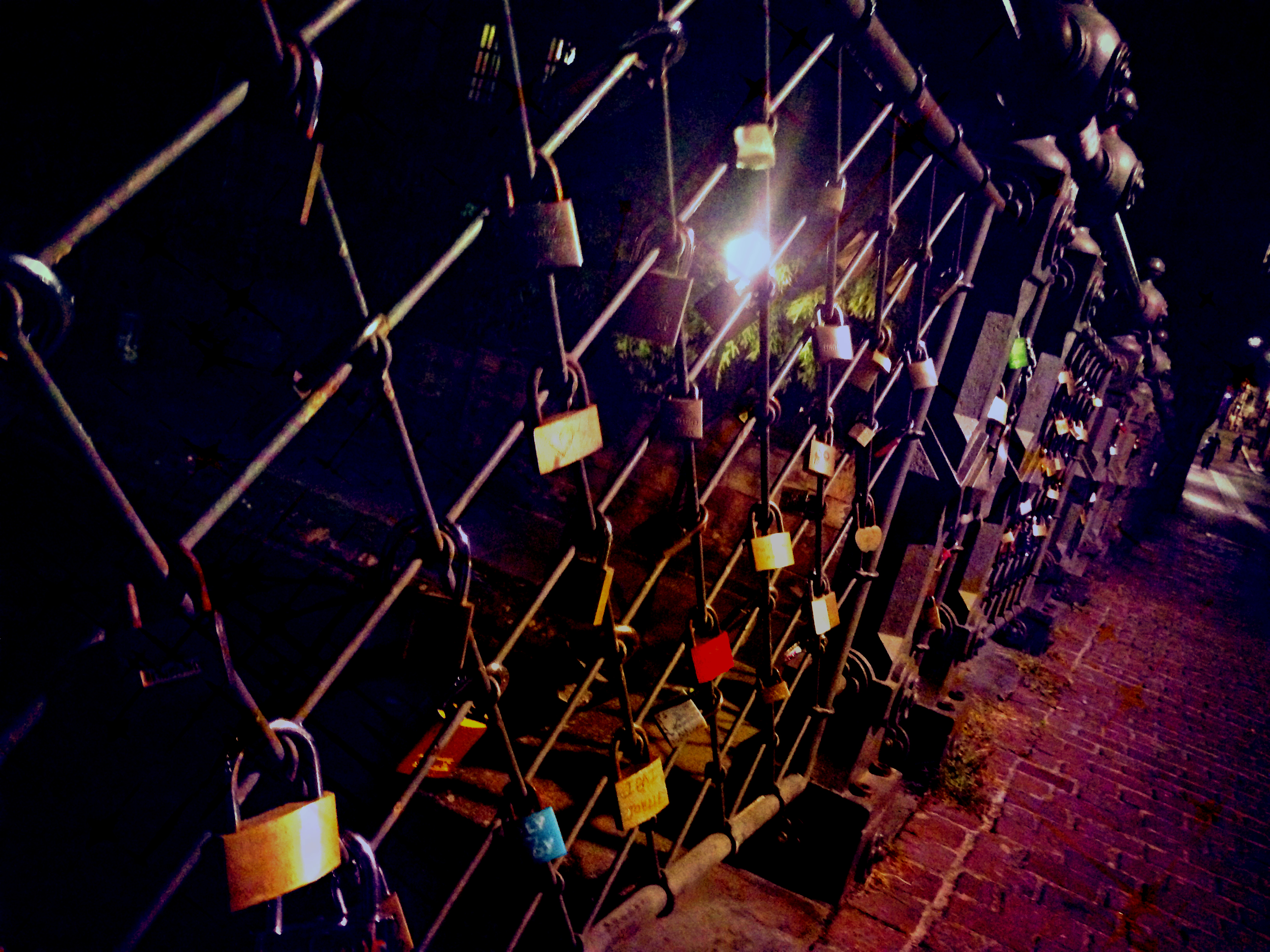
It is covered in locks. Locks between the iron cross-hatched bridge. I want some keys so that I might open these padlock hearts on the place used to cross an obstacle (in this case water). I wanted to discover these locks intimately and inspect their background, their lives which I will never know, their social identities I can only comprehend, and, most importantly, their passions.
SO… I am staring at these padlocks on the bridge of the river L´Îll in Strasbourg, France and realize I crave deeply the same things; to know others, to understand and be understood.
As I look down at the river I see the current pulling the debris of dead leaves and sticks through the mucky, brownish water. Farther down the river, the perception of the water gradually gets bluer and bluer; more aesthetic. The same with people; the reality of the person is revealed rather than our bias, stereotyped perspective. The same with a new country or temperament; the closer you get “real”and sometimes ugly realizations, rather than our crystal clear stereotypes…
So what do you do?
You wake up from your crystal blue dream and you prepare for the complexities that life brings and one by one you unlock the keys on your bridge from ignorance to revelation/understanding. One heart at a type, through discovering peoples passions and through wearing your heart on your sleeve.
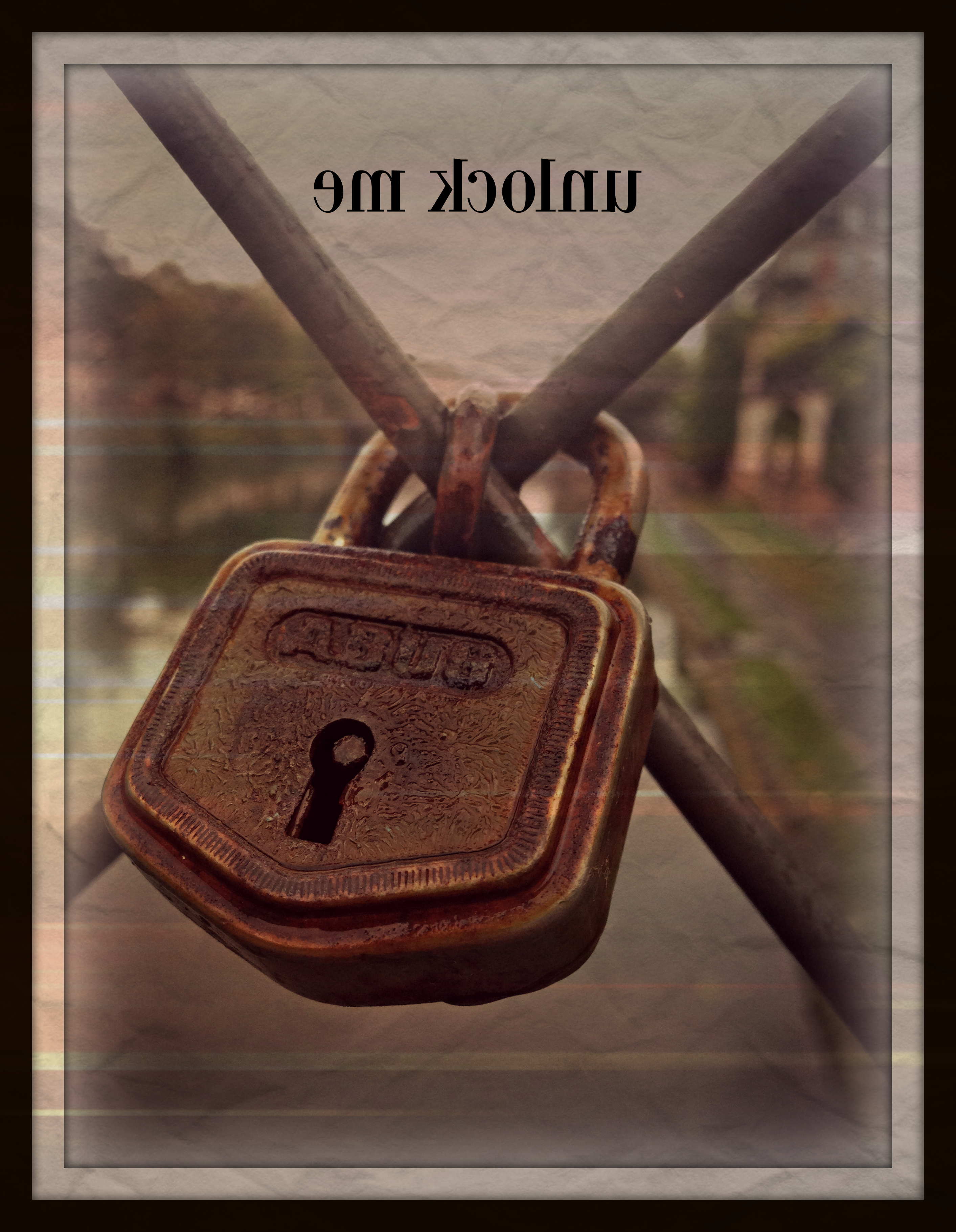
“Wearing your heart on your sleeve” is this week’s idiom, literally translated as “to have your heart on your lips.” With this phrase and the bridge analogy it reminds me to challenge my perspective about people and ideas. And foremost that through humility and vulnerability, one can learn far greater than those otherwise.
Some other highlights would be seeing my first performance art piece by Maike Freess (www.maikefreess.com) called “Transitions.” The performance space was a bench in the Contemporary Art Museum with about a 50 person attendance. She was dressed in a full berka, even her hands had gloves. The only thing visible were the eyes.
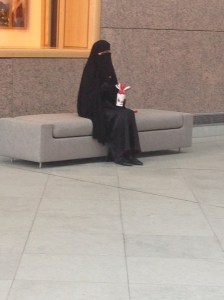
All that she did was sit down and slowly eat “Heidi’s” chocolate. After, she would present the chocolate to audience members, mostly women, in exchange for deep eye contact. This must have gone on for 30 minutes. I found myself deeply wanting the eye contact connection and candy but also scared to see and be seen, this exploration through performance art was exciting for me. Sort of reminds me of Marina Abromovi’s eye contact piece in New York (The Artist is Present).
This weekend was the Journées Européennes du Patromonie (Heritage weekend) meaning that all of the museums and churches were free to visit. Along with concerts and tours to celebrate the history of Strasbourg. Although I could not take part in much of the tours because of language difficulties, I was able to see “Le horloge astronomitique” ( The Astronomical clock) at the Cathedral de Strasbourg.


A video was shown illustrating the history and symbols of the clock, which was spoken in French, German, and English (yeah!). It was built in 1843 and is incredibly large, not only does it tell the time, but also the day of year and the position of the moon and stars along with the solar and lunar eclipses. The personal impact of this marvel is it shows so much of time through it’s depictions of fallen empires and biblical stories over time. Also at the very top Christ is reigning with the disciples fixed on him as they pass by him by the rotating gears. You have an essence that so much time has passed, however Jesus remains constant. At midday, there is a baby hitting a bell, smiling, encouraging the audience to treat the time wisely, and above the baby is a skeleton encouraging the same thing but with a different sentiments.
Seeing this monument reminds me of the concept of time and that we have been given a measure of it and no matter what happens through out history, good or bad, things will work together for good and the perfect Will of God.
That night I saw an incredible organ recital by an incredible artists in a 12th century old church, St. Pierre De Jeune. It has amazing acoustics. And it was incredible to travel through “time” with different selections of German and french composers from baroque to classical to french romanticism to German expressionism. Most surprising was Max Reger’s Introduction and Passacaglia in d minor.
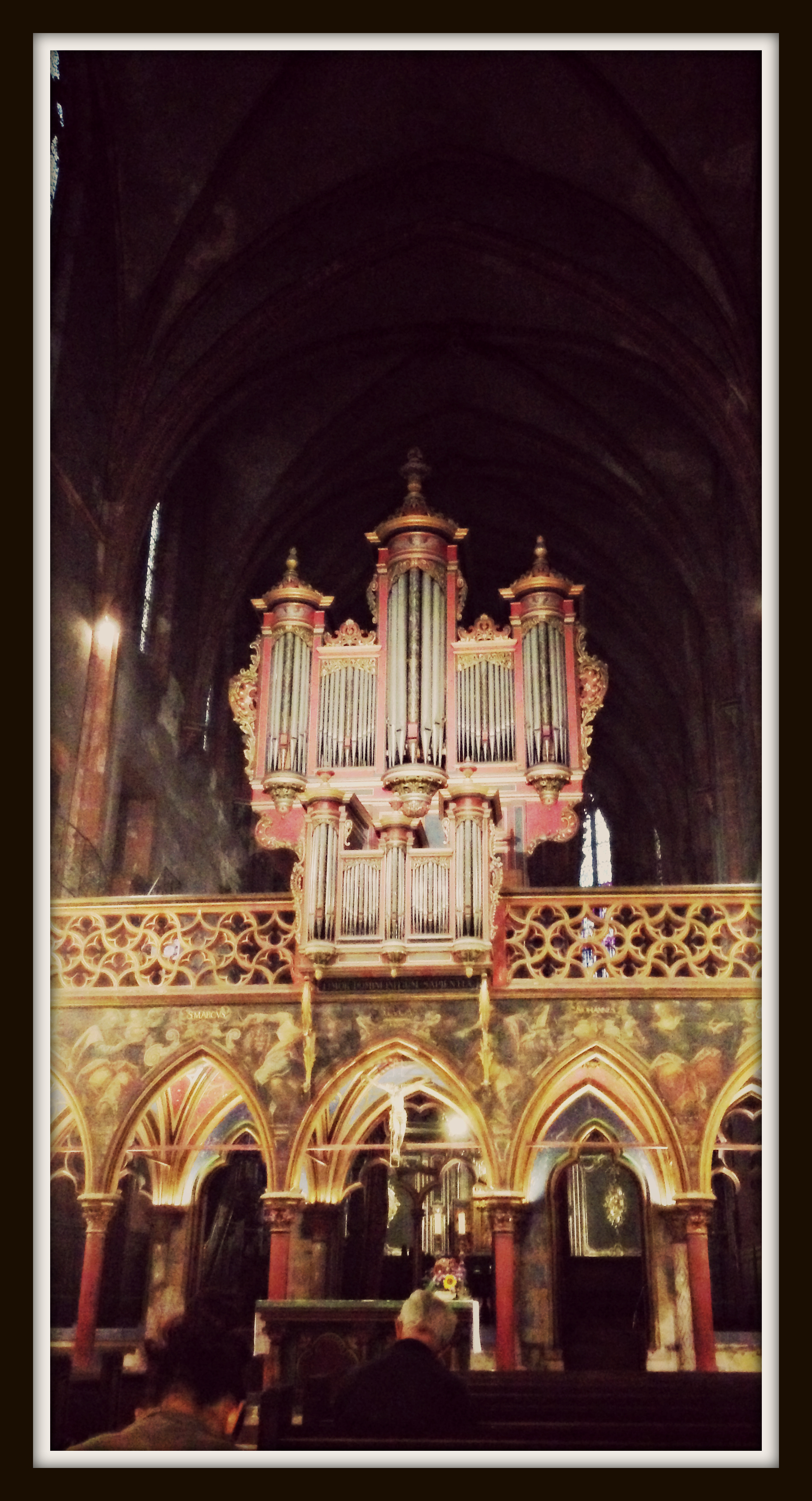
Here some snapshots from this week:


A La Prochain!
DCM
 Duncan Clark Menzies
Leave a comment